Suggested reading from Chicago Review Press
 Mother's Day Mother's Day |
 Father's Day Father's Day |



 |
Exploring a Vibrant Continent, 19 Activities
By Harvey Croze
<DIV>9–12; Grades 4–7<BR></DIV>
For Kids series
JUVENILE NONFICTION
144 Pages, 11 x 8 1/2
Formats: Trade Paper, Mobipocket, PDF, EPUB
MOBIPOCKET, $9.99 (US $9.99) (CA $12.99)
ISBN 9781569766279
Rights: WOR
Chicago Review Press (Apr 2007)
Overview
Reviews
Author Biography
May we also suggest...
Trade Paper
Published Jul 2004
Trade Paper
Published Aug 2005
Trade Paper
Published Feb 2008

Trade Paper
Published Mar 2008
Trade Paper
Published May 1999
Trade Paper
Published Oct 1998
Mobipocket
Published Oct 1998
Published Oct 1998
Trade Paper
Published Sep 2002
Trade Paper
Published Nov 1999
Mobipocket
Published Nov 1999
Published Nov 1999
Trade Paper
Published Sep 2002
Published Sep 2003
Trade Paper
Published Sep 2003
Trade Paper
Published Feb 2009
Published Oct 2012
2012 VOYA Nonfiction Honor List Selection
Best known for his general theory of relativity and the famous equation linking mass and energy, E = mc², Albert Einstein had a lasting impact on the world of science, the extent of which is illuminated—along with his fascinating life and unique personality—in this lively history. In addition to learning all about Einstein’s important contributions to science, from proving the existence and size of atoms and launching the field of quantum mechanics to creating models of the universe that led to the discovery of black holes and the big bang theory, young physicists will participate in activities and thought experiments to bring his theories and ideas to life. Such activities include using dominoes to model a nuclear chain reaction, replicating the expanding universe in a microwave oven, creating blue skies and red sunsets in a soda bottle, and calculating the speed of light using a melted chocolate bar. Suggestions for further study, a time line, and sidebars on the work of other physicists of the day make this an incredibly accessible resource for inquisitive children.
Published Feb 2009
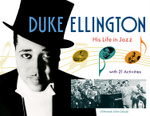
Duke Ellington, one of the most influential figures in American music, comes alive in this comprehensive biography with engaging activities. Ellington was an accomplished and influential jazz pianist, composer, band leader, and cultural diplomat. Activities include creating a ragtime rhythm, making a washtub bass, writing song lyrics, thinking like an arranger, and learning to dance the Lindy Hop. It explores Ellington’s life and career along with many topics related to African American history, including the Harlem Renaissance. Kids will learn about the musical evolution of jazz that coincided with Ellington’s long life from ragtime through the big band era on up to the 1970s. Kids learn how music technology has changed over the years from piano rolls to record albums through CDs, television, and portable music devices. The extensive resources include a time line, glossary, list of Ellington’s greatest recordings, related books, Web sites, and DVDs for further study.
Trade Paper
Published Feb 2009
Duke Ellington, one of the most influential figures in American music, comes alive in this comprehensive biography with engaging activities. Ellington was an accomplished and influential jazz pianist, composer, band leader, and cultural diplomat. Activities include creating a ragtime rhythm, making a washtub bass, writing song lyrics, thinking like an arranger, and learning to dance the Lindy Hop. It explores Ellington’s life and career along with many topics related to African American history, including the Harlem Renaissance. Kids will learn about the musical evolution of jazz that coincided with Ellington’s long life from ragtime through the big band era on up to the 1970s. Kids learn how music technology has changed over the years from piano rolls to record albums through CDs, television, and portable music devices. The extensive resources include a time line, glossary, list of Ellington’s greatest recordings, related books, Web sites, and DVDs for further study.
Trade Paper
Published May 2003
Trade Paper
Published Aug 2001
Mobipocket
Published Aug 2001
Published Jun 2000
Trade Paper
Published Jun 2000

Trade Paper
Published Aug 2006
Trade Paper
Published Jul 2005
Published Jul 2005
Trade Paper
Published Jul 2007
Trade Paper
Published Jul 2007
Trade Paper
Published Apr 2007
Trade Paper
Published Aug 2007
Published Feb 2006
Mobipocket
Published Feb 2006
Trade Paper
Published Feb 2006
Trade Paper
Published Jan 2005
Trade Paper
Published Sep 2004
Published Sep 2004
Trade Paper
Published Oct 2006
This lively and comprehensive activity book teaches young readers everything they need to know about the nation's highest court. Organized around keystones of the Constitution—including free speech, freedom of religion, civil rights, criminal justice, and property rights—the book juxtaposes historical cases with similar current cases. Presented with opinions from both sides of the court cases, readers can make up their own minds on where they stand on the important issues that have evolved in the Court over the past 200 years. Interviews with prominent politicians, high-court lawyers, and those involved with landmark decisions—including Ralph Nader, Rudolph Giuliani, Mario Cuomo, and Arlen Specter—show the personal impact and far-reaching consequences of the decisions. Fourteen engaging classroom-oriented activities involving violations of civil rights, exercises of free speech, and selecting a classroom Supreme Court bring the issues and cases to life. The first 15 amendments to the Constitution and a glossary of legal terms are also included.
Published Jul 2009
Mobipocket
Published Jul 2009
Trade Paper
Published Jul 2009
Published Oct 2009
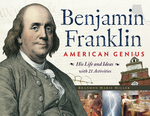
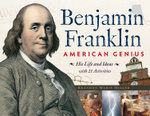
Benjamin Franklin was a 17-year-old runaway when he arrived in Philadelphia in 1723. Yet within days he’d found a job at a local print shop, met the woman he would eventually marry, and even attracted the attention of Pennsylvania’s governor. A decade later, he became a colonial celebrity with the publication of Poor Richard: An Almanack and would go on to become one of America’s most distinguished Founding Fathers. Franklin established the colonies’ first lending library, volunteer fire company, and postal service, and was a leading expert in the study of electricity. He represented the Pennsylvania colony in London but returned to help draft the Declaration of Independence. The new nation then named him Minister to France, where he helped secure financial and military aide for the breakaway republic.Author Brandon Marie Miller captures the essence of this exceptional individual through both his original writings and hands-on activities from the era. Readers will design and print an almanac cover, play a simple glass armonica (a Franklin invention), experiment with static electricity, build a barometer, and more. The text also includes a time line, glossary, Web and travel resources, and reading list for further study.
Trade Paper
Published Oct 2009
Benjamin Franklin was a 17-year-old runaway when he arrived in Philadelphia in 1723. Yet within days he’d found a job at a local print shop, met the woman he would eventually marry, and even attracted the attention of Pennsylvania’s governor. A decade later, he became a colonial celebrity with the publication of Poor Richard: An Almanack and would go on to become one of America’s most distinguished Founding Fathers. Franklin established the colonies’ first lending library, volunteer fire company, and postal service, and was a leading expert in the study of electricity. He represented the Pennsylvania colony in London but returned to help draft the Declaration of Independence. The new nation then named him Minister to France, where he helped secure financial and military aide for the breakaway republic.Author Brandon Marie Miller captures the essence of this exceptional individual through both his original writings and hands-on activities from the era. Readers will design and print an almanac cover, play a simple glass armonica (a Franklin invention), experiment with static electricity, build a barometer, and more. The text also includes a time line, glossary, Web and travel resources, and reading list for further study.
Trade Paper
Published Aug 2009
Published Aug 2009
Trade Paper
Published Jan 2010
Published Jan 2010
Trade Paper
Published Jul 2010
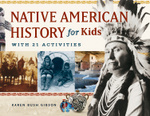
As the first Americans, hundreds of indigenous bands and nations already lived in North America when European explorers first set out to conquer an inhabited land. This book captures the early history of these complex societies and their 500-year struggle to survive against all odds from war, displacement, broken treaties, and boarding schools. Not only a history of tribal nations, Native American History for Kids also includes profiles of famous Native Americans and their many contributions, from early leaders to superstar athlete Jim Thorpe, dancer Maria Tallchief, astronaut John Herrington, author Sherman Alexie, actor Wes Studi, and more.
Readers will also learn about Indian culture through hands-on activities, such as planting a Three Sisters garden (corn, squash, and beans), making beef jerky in a low-temperature oven, weaving a basket out of folded newspaper strips, deciphering a World War II Navajo Code Talker message, and playing Ball-and-Triangle, a game popular with Penobscot children. And before they are finished, readers will be inspired to know that the history of the Native American people is the history of all Americans.
Mobipocket
Published Jul 2010
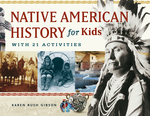
As the first Americans, hundreds of indigenous bands and nations already lived in North America when European explorers first set out to conquer an inhabited land. This book captures the early history of these complex societies and their 500-year struggle to survive against all odds from war, displacement, broken treaties, and boarding schools. Not only a history of tribal nations, Native American History for Kids also includes profiles of famous Native Americans and their many contributions, from early leaders to superstar athlete Jim Thorpe, dancer Maria Tallchief, astronaut John Herrington, author Sherman Alexie, actor Wes Studi, and more.
Readers will also learn about Indian culture through hands-on activities, such as planting a Three Sisters garden (corn, squash, and beans), making beef jerky in a low-temperature oven, weaving a basket out of folded newspaper strips, deciphering a World War II Navajo Code Talker message, and playing Ball-and-Triangle, a game popular with Penobscot children. And before they are finished, readers will be inspired to know that the history of the Native American people is the history of all Americans.
Published Jul 2010
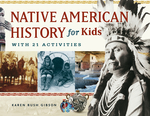
As the first Americans, hundreds of indigenous bands and nations already lived in North America when European explorers first set out to conquer an inhabited land. This book captures the early history of these complex societies and their 500-year struggle to survive against all odds from war, displacement, broken treaties, and boarding schools. Not only a history of tribal nations, Native American History for Kids also includes profiles of famous Native Americans and their many contributions, from early leaders to superstar athlete Jim Thorpe, dancer Maria Tallchief, astronaut John Herrington, author Sherman Alexie, actor Wes Studi, and more.
Readers will also learn about Indian culture through hands-on activities, such as planting a Three Sisters garden (corn, squash, and beans), making beef jerky in a low-temperature oven, weaving a basket out of folded newspaper strips, deciphering a World War II Navajo Code Talker message, and playing Ball-and-Triangle, a game popular with Penobscot children. And before they are finished, readers will be inspired to know that the history of the Native American people is the history of all Americans.
Mobipocket
Published Apr 2010
Named a Smithsonian Notable Book for Children for 2010
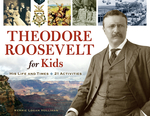
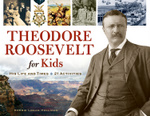
Theodore Roosevelt’s heart was as big as the great outdoors he loved. A sickly, undersized boy, he grew into a physically fit, energetic man whose courage knew no bounds. Roosevelt hailed from the top of American society, but wealth could not shield him from human tragedy. As leader of a young, vigorous nation, he steered a middle course between the power brokers of big business and the needs of ordinary working people. A keen student of nature, Roosevelt would protect millions of acres for posterity. He was a writer, ranchman, politician, soldier, explorer, family man, and America’s 26th president, the youngest person to ever hold the office.
Theodore Roosevelt for Kids brings to life this fascinating man, an American giant whose flaws were there for all the world to see. Twenty-one hands-on activities offer a useful glimpse at Roosevelt’s work and times. Readers will create a Native American toy, explore the effects of erosion, go on a modern big game hunt with a camera, and make felted teddy bears. The text includes a time line, online resources, and reading list for further study. And through it all, readers will appreciate how one man lived a “Bully!” life and made the word his very own.
Trade Paper
Published Apr 2010
Named a Smithsonian Notable Book for Children for 2010
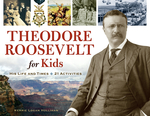
Theodore Roosevelt’s heart was as big as the great outdoors he loved. A sickly, undersized boy, he grew into a physically fit, energetic man whose courage knew no bounds. Roosevelt hailed from the top of American society, but wealth could not shield him from human tragedy. As leader of a young, vigorous nation, he steered a middle course between the power brokers of big business and the needs of ordinary working people. A keen student of nature, Roosevelt would protect millions of acres for posterity. He was a writer, ranchman, politician, soldier, explorer, family man, and America’s 26th president, the youngest person to ever hold the office.
Theodore Roosevelt for Kids brings to life this fascinating man, an American giant whose flaws were there for all the world to see. Twenty-one hands-on activities offer a useful glimpse at Roosevelt’s work and times. Readers will create a Native American toy, explore the effects of erosion, go on a modern big game hunt with a camera, and make felted teddy bears. The text includes a time line, online resources, and reading list for further study. And through it all, readers will appreciate how one man lived a “Bully!” life and made the word his very own.
Published Apr 2010
Named a Smithsonian Notable Book for Children for 2010
Theodore Roosevelt’s heart was as big as the great outdoors he loved. A sickly, undersized boy, he grew into a physically fit, energetic man whose courage knew no bounds. Roosevelt hailed from the top of American society, but wealth could not shield him from human tragedy. As leader of a young, vigorous nation, he steered a middle course between the power brokers of big business and the needs of ordinary working people. A keen student of nature, Roosevelt would protect millions of acres for posterity. He was a writer, ranchman, politician, soldier, explorer, family man, and America’s 26th president, the youngest person to ever hold the office.
Theodore Roosevelt for Kids brings to life this fascinating man, an American giant whose flaws were there for all the world to see. Twenty-one hands-on activities offer a useful glimpse at Roosevelt’s work and times. Readers will create a Native American toy, explore the effects of erosion, go on a modern big game hunt with a camera, and make felted teddy bears. The text includes a time line, online resources, and reading list for further study. And through it all, readers will appreciate how one man lived a “Bully!” life and made the word his very own.
Trade Paper
Published Jun 2011
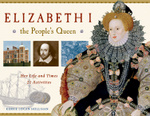
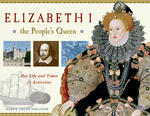
Queen Elizabeth I learned to trust no one. Even before Elizabeth was crowned queen at the age of 25, her mother, Anne Boleyn, had been executed for treason by her father, King Henry VIII. She was then removed from the royal line of succession and later imprisoned in the Tower of London, accused of plotting to overthrow her sister, Queen Mary. Yet despite all the challenges to her power, she became a hero of the Church of England in a century when Catholics and Protestants burned one another at the stake, she spoke five languages in a day when few women were taught to read, and she led a nation where men proclaimed that women had no right to take part in public life. During Elizabeth’s 45-year reign, English literature, theater, music, and culture flourished. And, after her navy defeated the Spanish armada, England’s military power made the once tiny kingdom into a chief player among Europe’s nations.
This lively biography of one of England’s greatest monarchs includes a time line, online resources, and 21 activities to offer readers hands-on experiences with life in the Elizabethan Era.
Kids can create costumes for the queen’s court, including a knight’s helmet, a neck ruff, and a cloak, play and sing a madrigal, create a 3-D map of an Elizabethan town, stitch a blackwork flower, design a family coat of arms, play a game of Nine Men’s Morris, grow a knot garden, and much more.
EPUB
Published Jun 2011
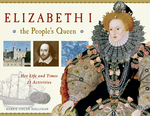
Queen Elizabeth I learned to trust no one. Even before Elizabeth was crowned queen at the age of 25, her mother, Anne Boleyn, had been executed for treason by her father, King Henry VIII. She was then removed from the royal line of succession and later imprisoned in the Tower of London, accused of plotting to overthrow her sister, Queen Mary. Yet despite all the challenges to her power, she became a hero of the Church of England in a century when Catholics and Protestants burned one another at the stake, she spoke five languages in a day when few women were taught to read, and she led a nation where men proclaimed that women had no right to take part in public life. During Elizabeth’s 45-year reign, English literature, theater, music, and culture flourished. And, after her navy defeated the Spanish armada, England’s military power made the once tiny kingdom into a chief player among Europe’s nations.
This lively biography of one of England’s greatest monarchs includes a time line, online resources, and 21 activities to offer readers hands-on experiences with life in the Elizabethan Era.
Kids can create costumes for the queen’s court, including a knight’s helmet, a neck ruff, and a cloak, play and sing a madrigal, create a 3-D map of an Elizabethan town, stitch a blackwork flower, design a family coat of arms, play a game of Nine Men’s Morris, grow a knot garden, and much more.
Mobipocket
Published Jun 2011
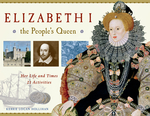
Queen Elizabeth I learned to trust no one. Even before Elizabeth was crowned queen at the age of 25, her mother, Anne Boleyn, had been executed for treason by her father, King Henry VIII. She was then removed from the royal line of succession and later imprisoned in the Tower of London, accused of plotting to overthrow her sister, Queen Mary. Yet despite all the challenges to her power, she became a hero of the Church of England in a century when Catholics and Protestants burned one another at the stake, she spoke five languages in a day when few women were taught to read, and she led a nation where men proclaimed that women had no right to take part in public life. During Elizabeth’s 45-year reign, English literature, theater, music, and culture flourished. And, after her navy defeated the Spanish armada, England’s military power made the once tiny kingdom into a chief player among Europe’s nations.
This lively biography of one of England’s greatest monarchs includes a time line, online resources, and 21 activities to offer readers hands-on experiences with life in the Elizabethan Era.
Kids can create costumes for the queen’s court, including a knight’s helmet, a neck ruff, and a cloak, play and sing a madrigal, create a 3-D map of an Elizabethan town, stitch a blackwork flower, design a family coat of arms, play a game of Nine Men’s Morris, grow a knot garden, and much more.
Published Jun 2011
Queen Elizabeth I learned to trust no one. Even before Elizabeth was crowned queen at the age of 25, her mother, Anne Boleyn, had been executed for treason by her father, King Henry VIII. She was then removed from the royal line of succession and later imprisoned in the Tower of London, accused of plotting to overthrow her sister, Queen Mary. Yet despite all the challenges to her power, she became a hero of the Church of England in a century when Catholics and Protestants burned one another at the stake, she spoke five languages in a day when few women were taught to read, and she led a nation where men proclaimed that women had no right to take part in public life. During Elizabeth’s 45-year reign, English literature, theater, music, and culture flourished. And, after her navy defeated the Spanish armada, England’s military power made the once tiny kingdom into a chief player among Europe’s nations.
This lively biography of one of England’s greatest monarchs includes a time line, online resources, and 21 activities to offer readers hands-on experiences with life in the Elizabethan Era.
Kids can create costumes for the queen’s court, including a knight’s helmet, a neck ruff, and a cloak, play and sing a madrigal, create a 3-D map of an Elizabethan town, stitch a blackwork flower, design a family coat of arms, play a game of Nine Men’s Morris, grow a knot garden, and much more.
Trade Paper
Published Aug 2011
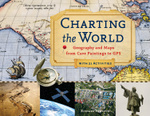
As soon as early humans began to scratch images on cave walls, they began to create maps. And while these first drawings were used to find hunting grounds or avoid danger, they later developed into far more complex navigational tools. Charting the World tells the fascinating history of maps and mapmaking, navigators and explorers, and the ways that technology has enhanced our ability to understand the world around us. Richly illustrated with full-color maps and diagrams, it gives children an in-depth appreciation of geographical concepts and principles and shows them how to unlock the wealth of information maps contain. It also features 21 hands-on activities for readers to put their new skills to the test.
Children will: build a three-dimensional island model using a contour map, engrave a simple map on an aluminum “printing plate,” determine the elevation of hills in their neighborhood, draw a treasure map and have a friend search for the hidden stash, create a nautical chart of a small puddle, survey their backyard or local park, navigate a course using a compass, and much more.
Now more than ever, the study of geography is crucial to understanding our ever-changing planet, from political change and warfare to environmental conservation and population growth.
EPUB
Published May 2011
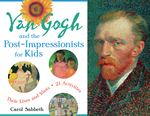
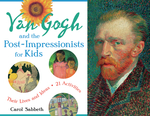
Swirling, curling brushstrokes. Vivid colors. Thick layers of paint. These are the hallmarks of a painting by Vincent van Gogh, whose work his fellow artist Paul Cézanne once called “that of a madman.” But Van Gogh and the Post-Impressionists for Kids moves beyond the image of the mad pauper to reveal a complex young man who loved nature and reading, spoke four languages, and enjoyed a successful career as a gallery salesman before embarking on studies as a minister and, finally, finding his calling as an artist.
Kids journey from the Netherlands to Paris to southern France as they learn about van Gogh’s friendships with four other like-minded painters who admired but were determined to depart from Impressionism: Paul Gauguin, Paul Signac, Émile Bernard, and Henri de Toulouse-Lautrec. Aspiring artists and history buffs learn not only how these Post-Impressionists’ daring shapes, colors, and techniques distinguished their work from what was painted before but also how the men helped one another and whether or not they always got along.
Twenty-one creative projects bring history and art to life. Readers will create a Starry Night peep box, make a Pointillist sailboat (that can really sail!), craft a Japanese fold-out album, and much more. The text includes a time line, glossary, and reading list for further study.
Mobipocket
Published May 2011
Vincent van Gogh’s admiration for and departure from Impressionism and his relationships with the other enthusiastic, like-minded artists who ultimately formed the Post-Impressionist movement are explained and explored in this collection of art activities for kids. Debunking the persistent stereotype of the mad pauper who cut off his ear, van Gogh is revealed as the serious boy who loved nature and reading and spoke four languages; the young man who took great satisfaction in the study of art, his successful career as a gallery salesman, and the “brotherhood of artists” he helped to create; and the increasingly troubled and ill man who cared deeply for family and friends and tried in vain to recover. Through a series of fun and creative projects, such as a Starry Night Peep Box, a Pointillist Sailboat, and a Japanese Fold-out Album, kids will be exposed to such art as van Gogh’s vibrant landscapes, Paul Signac’s
Published May 2011
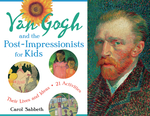
Swirling, curling brushstrokes. Vivid colors. Thick layers of paint. These are the hallmarks of a painting by Vincent van Gogh, whose work his fellow artist Paul Cézanne once called “that of a madman.” But Van Gogh and the Post-Impressionists for Kids moves beyond the image of the mad pauper to reveal a complex young man who loved nature and reading, spoke four languages, and enjoyed a successful career as a gallery salesman before embarking on studies as a minister and, finally, finding his calling as an artist.
Kids journey from the Netherlands to Paris to southern France as they learn about van Gogh’s friendships with four other like-minded painters who admired but were determined to depart from Impressionism: Paul Gauguin, Paul Signac, Émile Bernard, and Henri de Toulouse-Lautrec. Aspiring artists and history buffs learn not only how these Post-Impressionists’ daring shapes, colors, and techniques distinguished their work from what was painted before but also how the men helped one another and whether or not they always got along.
Twenty-one creative projects bring history and art to life. Readers will create a Starry Night peep box, make a Pointillist sailboat (that can really sail!), craft a Japanese fold-out album, and much more. The text includes a time line, glossary, and reading list for further study.
Trade Paper
Published May 2011
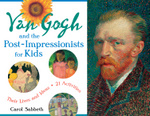
Swirling, curling brushstrokes. Vivid colors. Thick layers of paint. These are the hallmarks of a painting by Vincent van Gogh, whose work his fellow artist Paul Cézanne once called “that of a madman.” But Van Gogh and the Post-Impressionists for Kids moves beyond the image of the mad pauper to reveal a complex young man who loved nature and reading, spoke four languages, and enjoyed a successful career as a gallery salesman before embarking on studies as a minister and, finally, finding his calling as an artist.
Kids journey from the Netherlands to Paris to southern France as they learn about van Gogh’s friendships with four other like-minded painters who admired but were determined to depart from Impressionism: Paul Gauguin, Paul Signac, Émile Bernard, and Henri de Toulouse-Lautrec. Aspiring artists and history buffs learn not only how these Post-Impressionists’ daring shapes, colors, and techniques distinguished their work from what was painted before but also how the men helped one another and whether or not they always got along.
Twenty-one creative projects bring history and art to life. Readers will create a Starry Night peep box, make a Pointillist sailboat (that can really sail!), craft a Japanese fold-out album, and much more. The text includes a time line, glossary, and reading list for further study.
Published Nov 2005
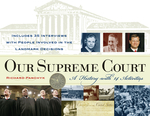
Published Apr 2007
This lively and comprehensive activity book teaches young readers everything they need to know about the nation's highest court. Organized around keystones of the Constitution—including free speech, freedom of religion, civil rights, criminal justice, and property rights—the book juxtaposes historical cases with similar current cases. Presented with opinions from both sides of the court cases, readers can make up their own minds on where they stand on the important issues that have evolved in the Court over the past 200 years. Interviews with prominent politicians, high-court lawyers, and those involved with landmark decisions—including Ralph Nader, Rudolph Giuliani, Mario Cuomo, and Arlen Specter—show the personal impact and far-reaching consequences of the decisions. Fourteen engaging classroom-oriented activities involving violations of civil rights, exercises of free speech, and selecting a classroom Supreme Court bring the issues and cases to life. The first 15 amendments to the Constitution and a glossary of legal terms are also included.
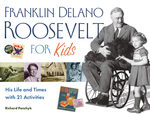
Published Aug 2007
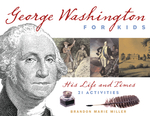
Published Apr 2007
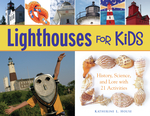
Published Mar 2008
Published Feb 2009
Mobipocket
Published Oct 2012
2012 VOYA Nonfiction Honor List Selection
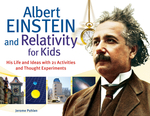
Best known for his general theory of relativity and the famous equation linking mass and energy, E = mc², Albert Einstein had a lasting impact on the world of science, the extent of which is illuminated—along with his fascinating life and unique personality—in this lively history. In addition to learning all about Einstein’s important contributions to science, from proving the existence and size of atoms and launching the field of quantum mechanics to creating models of the universe that led to the discovery of black holes and the big bang theory, young physicists will participate in activities and thought experiments to bring his theories and ideas to life. Such activities include using dominoes to model a nuclear chain reaction, replicating the expanding universe in a microwave oven, creating blue skies and red sunsets in a soda bottle, and calculating the speed of light using a melted chocolate bar. Suggestions for further study, a time line, and sidebars on the work of other physicists of the day make this an incredibly accessible resource for inquisitive children.
Mobipocket
Published Jul 2007
Published Jul 2007

Published Apr 2007
Mobipocket
Published Sep 2002
Published Sep 2002
Published Oct 2001
Mobipocket
Published Oct 2001
Published Jul 2007
Mobipocket
Published Jul 2007
Mobipocket
Published Jun 2000
Published Jun 2000
Mobipocket
Published Oct 2003
Published Oct 2003
Mobipocket
Published Nov 2005
Mobipocket
Published Nov 2005
Published Nov 2005
EPUB
Published Jul 2007
EPUB
Published Oct 2001
EPUB
Published Nov 2005

EPUB
Published Apr 2007
EPUB
Published Oct 2003
EPUB
Published Apr 2007
This lively and comprehensive activity book teaches young readers everything they need to know about the nation's highest court. Organized around keystones of the Constitution—including free speech, freedom of religion, civil rights, criminal justice, and property rights—the book juxtaposes historical cases with similar current cases. Presented with opinions from both sides of the court cases, readers can make up their own minds on where they stand on the important issues that have evolved in the Court over the past 200 years. Interviews with prominent politicians, high-court lawyers, and those involved with landmark decisions—including Ralph Nader, Rudolph Giuliani, Mario Cuomo, and Arlen Specter—show the personal impact and far-reaching consequences of the decisions. Fourteen engaging classroom-oriented activities involving violations of civil rights, exercises of free speech, and selecting a classroom Supreme Court bring the issues and cases to life. The first 15 amendments to the Constitution and a glossary of legal terms are also included.
EPUB
Published Sep 2002
EPUB
Published Jun 2000
EPUB
Published Nov 2005
EPUB
Published Jul 2007
EPUB
Published Aug 2007
EPUB
Published Apr 2007
EPUB
Published Mar 2008
Trade Paper
Published Sep 2011
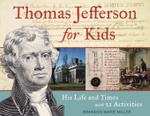
Drawing heavily from the original letters and papers of Thomas Jefferson and his contemporaries, this resource chronicles the world of the Founding Father who wrote the Declaration of Independence. From his early critiques of the colonial policies of
Trade Paper
Published Oct 2011
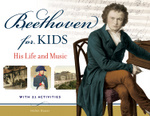
Ludwig van Beethoven was a great innovator who expanded the limits of
classical music to write some of the biggest, boldest, most complex and revolutionary compositions of all time. This fascinating man and his works are brought vividly to life and made relevant to today in Beethoven for Kids. Young readers will be intrigued by Beethoven’s hardscrabble childhood and turbulent family life, his early gift and passion for music, and his famously fiery personality. In addition, they’ll learn about the great musicians and thinkers and historical events and movements of Beethoven’s time and how they affected the composer’s life and music.
Kids will be inspired to learn how Beethoven championed equality and freedom throughout his life, rejected the strict societal divisions and norms of the day, and never gave up on his work despite increasing hearing loss. Budding musicians will also come away with a thorough understanding of complex music concepts such as counterpoint, ornamentation, improvisation, and motifs. Twenty-one engaging, hands-on activities illuminate the times in which Beethoven lived or reinforce music concepts introduced.