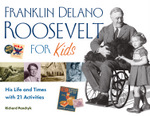
Franklin Delano Roosevelt’s enduring legacy upon the history, culture, politics, and economics of the United States is introduced to children in this engaging activity book. Kids will learn how FDR, a member of one of the founding families of the New World, led the nation through the darkest days of the Great Depression and World War II as 32nd U.S. President. This book examines the Roosevelt family—including famous cousin Teddy Roosevelt and First Lady Eleanor Roosevelt—as well as FDR’s early political career and subsequent 12 years in office during some of the most fascinating and turbulent times in American history. Interspersed throughout are first-hand accounts from the people who knew FDR and remember him well. Children will also learn how his personal struggles with polio and his physical disability strengthened FDR's compassion and resolve. In addition, kids will explore Roosevelt's entire era through such hands-on activities as staging a fireside chat, designing a WPA-style mural, sending a double encoded message, hosting a swing dance party, and participating in a political debate.
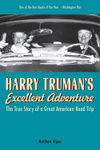
From Missouri to New York and back again, this recounting of an amazing journey chronicles the road trip of a former president and his wife and their amusing, failed attempts to keep a low profile. Diners, bellhops, and cabbies shouted out “Hiya, Harry!” whenever they recognized the former president, and, out for his daily constitutional on the streets of New York, Harry even stumbled into the sidewalk shot of the newly launched Today show. Along the way there are brief detours into relevant topics, such as the postwar American auto industry, McCarthyism, the development of the nation’s highway system, and the decline of Main Street America. By the end of the 2,500-mile journey, readers will have a new and heartfelt appreciation for America’s last citizen-president.
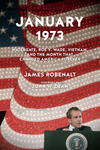
In January 1973, politics in America changed forever as, in the span of 31 days, the Watergate burglars went on trial, the Nixon administration negotiated an end to the Vietnam War, the Supreme Court issued its decision in Roe v. Wade, Lyndon Johnson died in Texas, and Richard Nixon was sworn in for his second term. The events had unlikely links and each worked along with the others to create a time of immense transformation. Using newly released Nixon tapes, author and historian James Robenalt provides readers an insider’s look at what happened in the White House, events both fascinating and terrifying, during this monumental month. He also delves into the judge’s chambers and courtroom drama during the Watergate break-in trial, and the inner sanctum of the United States Supreme Court as it hashed out its decision in Roe v. Wade. A foreword by John W. Dean sets the stage for this unique history, which details events that, while taking place more than 40 years ago, are key to understanding today’s current political paralysis.
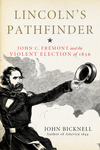
The 1856 presidential race was the most violent peacetime election in American history. War between proslavery and antislavery settlers raged in Kansas; a congressman shot an Irish immigrant at a Washington hotel; and another congressman beat a US senator senseless on the floor of the Senate. But amid all the violence, the campaign of the new Republican Party, headed by famed explorer John C. Frémont, offered a ray of hope: a major party dedicated to limiting the spread of slavery. For the first time, women and African Americans actively engaged in a presidential contest, and the candidate’s wife, Jessie Benton Frémont, played a central role in both planning and executing strategy, and was a public face of the campaign. Even enslaved blacks in the South took hope from Frémont’s crusade.
The 1856 campaign was also run against the backdrop of a country on the move, with settlers continuing to spread westward facing unimagined horrors, a terrible natural disaster that took hundreds of lives in the South, and one of the most famous Supreme Court cases in history, which set the stage for the Civil War. Frémont lost, but his strong showing in the North proved that a sectional party could win a national election, blazing the trail for Abraham Lincoln’s victory four years later.
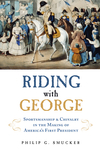
Long before George Washington was a president or general, he was a sportsman. At six feet two inches with a penchant for rambunctious horse riding, what he lacked in formal schooling he made up for in physical strength, skill, and ambition. Washington’s memorable performances on the hunting field and on the battlefield helped crystallize his contribution to our modern ideas about athleticism and chivalry, even as they also highlight the intimate ties between sports and war. Author Philip G. Smucker, a fifth-great grandnephew of George Washington, uses his background as a war correspondent, sports reporter, and amateur equestrian to weave an insightful tale based upon his own travels in the footsteps of Washington as a surveyor, sportsman, and field commander. Riding with George is “boots-in-stirrups” storytelling that unspools Washington’s rise to fame in a never-before-told tale. It shows how a young Virginian’s athleticism and Old World chivalry propelled him to become a model of right action and good manners for a fledgling nation.
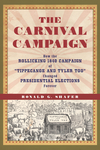
The Carnival Campaign tells the fascinating story of the pivotal 1840 presidential campaign of General William Henry Harrison and John Tyler—“Tippecanoe and Tyler Too.” Pulitzer Prize–nominated former Wall Street Journal reporter Ronald Shafer relates in a colorful, entertaining style how the campaign marked a series of “firsts” that changed politicking forever: the first campaign as mass entertainment; the first “image campaign,” in which strategists portrayed Harrison as a poor man living in a log cabin sipping hard cider (he lived in a mansion and drank only sweet cider); the first time big money was a factor; the first time women could openly participate; and more. While today’s electorate has come to view campaigns that emphasize style over substance as a matter of course, this book shows voters how it all began.
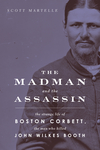
As thoroughly examined as the Civil War and the assassination of Abraham Lincoln by John Wilkes Booth have been, virtually no attention has been paid to the life of the Union cavalryman who killed Booth, an odd character named Boston Corbett. The killing of Booth made Corbett an instant celebrity whose peculiarities made him the object of fascination and derision. Corbett was an English immigrant, a hatter by trade, who was likely poisoned by the mercury then used in the manufacturing process. A devout Christian, he castrated himself so that his sexual urges would not distract him from serving God. He was one of the first volunteers to join the US Army in the first days of the Civil War, a path that would in time land him in the notorious Andersonville prison camp, and eventually in the squadron that cornered Booth in a Virginia barn. The Madman and the Assassin is the first full-length biography of Boston Corbett, a man who was something of a prototypical modern American, thrust into the spotlight during a national news event—an unwelcome transformation from anonymity to celebrity.
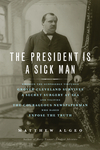
An extraordinary yet almost unknown chapter in American history is revealed in this extensively researched exposé. On July 1, 1893, President Grover Cleveland boarded a friend’s yacht and was not heard from for five days. During that time, a team of doctors removed a cancerous tumor from the president’s palate along with much of his upper jaw. When an enterprising reporter named E. J. Edwards exposed the secret operation, Cleveland denied it and Edwards was consequently dismissed as a disgrace to journalism. Twenty-four years later, one of the president’s doctors finally revealed the incredible truth, but many Americans simply would not believe it. After all, Grover Cleveland’s political career was built upon honesty—his most memorable quote was “Tell the truth”—so it was nearly impossible to believe he was involved in such a brazen cover-up. This is the first full account of the disappearance of Grover Cleveland during that summer more than a century ago.
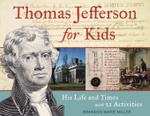
Drawing heavily from the original letters and papers of Thomas Jefferson and his contemporaries, this resource chronicles the world of the Founding Father who wrote the Declaration of Independence. From his early critiques of the colonial policies of Great Britain and King George III to his governmental roles as the first secretary of state, the minister to France, and the third president of the United States, Jefferson’s groundbreaking achievements are described in historical context. The contradictions in Jefferson’s character—most notably the fact that he owned 600 slaves in his lifetime despite penning the immortal phrase "all men are created equal"—are also explored, giving kids a full picture of this skilled politician. Creative activities that invite children to experience Jefferson's colonial America include designing a Palladian window, building a simple microscope, painting a “buffalo robe,” and dancing a reel.
 Mother's Day
 Father's Day