
Follow Us


Published May 2007
Published Jun 2007
Published Nov 2009
Hands-on activities, games, and crafts introduce children to the diversity of Native American cultures and teach them about the people, experiences, and events that have helped shape America, past and present. Nine geographical areas cover a variety of communities such as the Mohawk in the Northeast, Ojibway in the Midwest, Shoshone in the Great Basin, Apache in the Southwest, Yup'ik in Alaska, and Native Hawaiians. Featuring a look at the lives of notable historical and contemporary individuals, including Chief Joseph and Maria Tallchief, this guide also covers a variety of topics, such as first encounters with Europeans, Indian removal, Mohawk skywalkers, and Navajo code talkers. With activities that highlight the arts, games, food, clothing, unique celebrations, language and lifeways of various nations, kids can make Iroquois corn husk dolls, play Washoe stone jacks, design Inupiat sun goggles, or create a Hawaiian Ma'o-hau-hele Bag. A time line, glossary, and recommendations for websites, books, movies, and museums for further study round out this multicultural guide.
Published Aug 2009
A Kid’s Guide to Latino History features more than 50 hands-on activities, games, and crafts that explore the diversity of Latino culture and teach children about the people, experiences, and events that have shaped Hispanic American history.
Kids can:
* Fill Mexican cascarones for Easter
* Learn to dance the merengue from the Dominican Republic
* Write a short story using “magical realism” from Columbia
* Build Afro-Cuban Bongos
* Create a vejigante mask from Puerto Rico
* Make Guatemalan worry dolls
* Play Loteria, or Mexican bingo, and learn a little Spanish
* And much more
Did you know that the first immigrants to live in America were not the English settlers in Jamestown or the Pilgrims in Plymouth, but the Spanish? They built the first permanent American settlement in St. Augustine, Florida, in 1565. The long and colorful history of Latinos in America comes alive through learning about the missions and early settlements in Florida, New Mexico, Arizona, and California; exploring the Santa Fe Trail; discovering how the Mexican-American War resulted in the Southwest becoming part of the United States; and seeing how recent immigrants from Central and South America bring their heritage to cities like New York and Chicago.
Latinos have transformed American culture and kids will be inspired by Latino authors, artists, athletes, activists, and others who have made significant contributions to American history.
Published Jan 2013
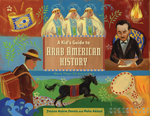
Dispelling common stereotypes—such as the belief that all Arabs share the same culture, religion, and language, and have only recently begun immigrating to the United States—this exploration provides a contemporary as well as historical look at the people and experiences that have shaped Arab American culture. Each chapter focuses on a different group of Arab Americans, including those of Lebanese, Syrian, Palestinian, Jordanian, Egyptian, Iraqi, and Yemeni descent, and features activities that highlight their distinct arts, games, clothing, and food. Kids will love dancing the dabke, constructing a derbekke drum, playing a game of senet, making hummus, creating an arabesque design, and crafting an Egyptian-style cuff bracelet. Along the way they will learn to count in Kurdish, pick up a few Syrian words for family members, learn a Yemeni saying, and learn to speak some Iraqi. Short biographies of notable Arab Americans demonstrate a wide variety of careers and contributions, including actor and philanthropist Danny Thomas, singer Paula Abdul, quarterback Doug Flutie, and activist Ralph Nader. Kids will come away with a better understanding of how Arab Americans have helped build and protect this country and have been part of our fabric as a nation for well over 100 years.
Published Jul 2007
Published Aug 2006
Published Oct 2012
2012 VOYA Nonfiction Honor List Selection
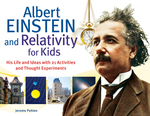
Best known for his general theory of relativity and the famous equation linking mass and energy, E = mc², Albert Einstein had a lasting impact on the world of science, the extent of which is illuminated—along with his fascinating life and unique personality—in this lively history. In addition to learning all about Einstein’s important contributions to science, from proving the existence and size of atoms and launching the field of quantum mechanics to creating models of the universe that led to the discovery of black holes and the big bang theory, young physicists will participate in activities and thought experiments to bring his theories and ideas to life. Such activities include using dominoes to model a nuclear chain reaction, replicating the expanding universe in a microwave oven, creating blue skies and red sunsets in a soda bottle, and calculating the speed of light using a melted chocolate bar. Suggestions for further study, a time line, and sidebars on the work of other physicists of the day make this an incredibly accessible resource for inquisitive children.
Published Jan 2010
Published Sep 2004
Published Oct 2011
Ludwig van Beethoven was a great innovator who expanded the limits of
classical music to write some of the biggest, boldest, most complex and revolutionary compositions of all time. This fascinating man and his works are brought vividly to life and made relevant to today in Beethoven for Kids. Young readers will be intrigued by Beethoven’s hardscrabble childhood and turbulent family life, his early gift and passion for music, and his famously fiery personality. In addition, they’ll learn about the great musicians and thinkers and historical events and movements of Beethoven’s time and how they affected the composer’s life and music.
Kids will be inspired to learn how Beethoven championed equality and freedom throughout his life, rejected the strict societal divisions and norms of the day, and never gave up on his work despite increasing hearing loss. Budding musicians will also come away with a thorough understanding of complex music concepts such as counterpoint, ornamentation, improvisation, and motifs. Twenty-one engaging, hands-on activities illuminate the times in which Beethoven lived or reinforce music concepts introduced.
Published Oct 2009
Benjamin Franklin was a 17-year-old runaway when he arrived in Philadelphia in 1723. Yet within days he’d found a job at a local print shop, met the woman he would eventually marry, and even attracted the attention of Pennsylvania’s governor. A decade later, he became a colonial celebrity with the publication of Poor Richard: An Almanack and would go on to become one of America’s most distinguished Founding Fathers. Franklin established the colonies’ first lending library, volunteer fire company, and postal service, and was a leading expert in the study of electricity. He represented the Pennsylvania colony in London but returned to help draft the Declaration of Independence. The new nation then named him Minister to France, where he helped secure financial and military aide for the breakaway republic.Author Brandon Marie Miller captures the essence of this exceptional individual through both his original writings and hands-on activities from the era. Readers will design and print an almanac cover, play a simple glass armonica (a Franklin invention), experiment with static electricity, build a barometer, and more. The text also includes a time line, glossary, Web and travel resources, and reading list for further study.
Published Jan 2012
The story of California is the story of dreamers—explorers, gold miners, immigrants, ranchers, moviemakers, farmers, and everyday Americans who headed west for a fresh start. The first native inhabitants arrived 9,000 years ago, ancestors of the tribes who would greet the Spanish in the 1700s. Father Junípero Serra later established a chain of missions along the coast, expanding European and Mexican influence. But when gold was discovered in 1848, the rush was on, and two short years later California became a state. After the gold ran out, other rushes followed, from agriculture to industry, Hollywood to Silicon Valley.
California History for Kids includes a time line of significant events, a list of historic sites to visit or explore online, and Web resources for further study. And to get a better idea of the scope of California history and the lives of its citizens, readers can:
* create a Chumash rock painting
* play the Miwok Hoop-and-Pole game
* bake and eat hardtack like a gold miner
* design a cattle brand
* decode a railroad cipher
* immortalize their handprints in plaster
* assemble an earthquake preparedness kit
* and more
Author Katy Duffield tells the rich story of the men and women who, despite challenges and occasional hardships, settled and built the vibrant cities and bountiful farms, ranches, and orchards of the Golden State.
Published Aug 2011
As soon as early humans began to scratch images on cave walls, they began to create maps. And while these first drawings were used to find hunting grounds or avoid danger, they later developed into far more complex navigational tools. Charting the World tells the fascinating history of maps and mapmaking, navigators and explorers, and the ways that technology has enhanced our ability to understand the world around us. Richly illustrated with full-color maps and diagrams, it gives children an in-depth appreciation of geographical concepts and principles and shows them how to unlock the wealth of information maps contain. It also features 21 hands-on activities for readers to put their new skills to the test.
Children will: build a three-dimensional island model using a contour map, engrave a simple map on an aluminum “printing plate,” determine the elevation of hills in their neighborhood, draw a treasure map and have a friend search for the hidden stash, create a nautical chart of a small puddle, survey their backyard or local park, navigate a course using a compass, and much more.
Now more than ever, the study of geography is crucial to understanding our ever-changing planet, from political change and warfare to environmental conservation and population growth.
Published Jul 2007
Published Oct 2013
An NCSS Notable Social Studies Trade Book for Young People
Christopher Columbus is one of the most famous people in world history, yet few know the full story of the amazing, resourceful, and tragic Italian explorer. Christopher Columbus and the Age of Exploration for Kids portrays the “Admiral of the Ocean Seas” neither as hero nor heel but as a flawed and complex man whose significance is undeniably monumental. Kids will gain a fuller picture of the seafarer’s life, his impact, and the dangers and thrills of exploration as they learn about all four of Columbus’s voyages to the New World, not just his first, as well as the year that Columbus spent stranded on the island of Jamaica without hope of rescue. Students, parents, and teachers will appreciate the in-depth discussions of the indigenous peoples of the New World and of the consequences of Columbus’s voyages—the exchange of diseases, ideas, crops, and populations between the New World and the Old. Fun hands-on activities illuminate both the nautical concepts introduced and the times in which Columbus lived. Kids can:
Published Feb 2009
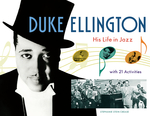
Duke Ellington, one of the most influential figures in American music, comes alive in this comprehensive biography with engaging activities. Ellington was an accomplished and influential jazz pianist, composer, band leader, and cultural diplomat. Activities include creating a ragtime rhythm, making a washtub bass, writing song lyrics, thinking like an arranger, and learning to dance the Lindy Hop. It explores Ellington’s life and career along with many topics related to African American history, including the Harlem Renaissance. Kids will learn about the musical evolution of jazz that coincided with Ellington’s long life from ragtime through the big band era on up to the 1970s. Kids learn how music technology has changed over the years from piano rolls to record albums through CDs, television, and portable music devices. The extensive resources include a time line, glossary, list of Ellington’s greatest recordings, related books, Web sites, and DVDs for further study.
Published Jun 2011
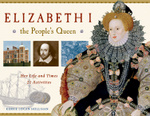
Queen Elizabeth I learned to trust no one. Even before Elizabeth was crowned queen at the age of 25, her mother, Anne Boleyn, had been executed for treason by her father, King Henry VIII. She was then removed from the royal line of succession and later imprisoned in the Tower of London, accused of plotting to overthrow her sister, Queen Mary. Yet despite all the challenges to her power, she became a hero of the Church of England in a century when Catholics and Protestants burned one another at the stake, she spoke five languages in a day when few women were taught to read, and she led a nation where men proclaimed that women had no right to take part in public life. During Elizabeth’s 45-year reign, English literature, theater, music, and culture flourished. And, after her navy defeated the Spanish armada, England’s military power made the once tiny kingdom into a chief player among Europe’s nations.
This lively biography of one of England’s greatest monarchs includes a time line, online resources, and 21 activities to offer readers hands-on experiences with life in the Elizabethan Era.
Kids can create costumes for the queen’s court, including a knight’s helmet, a neck ruff, and a cloak, play and sing a madrigal, create a 3-D map of an Elizabethan town, stitch a blackwork flower, design a family coat of arms, play a game of Nine Men’s Morris, grow a knot garden, and much more.
Published Feb 2008
Published Aug 2007
Published Jun 2012
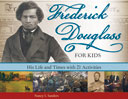
Few Americans have had as much impact on this nation as Frederick Douglass. Born on a plantation, he later escaped slavery and helped others to freedom via the Underground Railroad. In time he became a bestselling author, an outspoken newspaper editor, a brilliant orator, a tireless abolitionist, and a brave civil rights leader. He was famous on both sides of the Atlantic in the years leading up to the Civil War, and when war broke out, Abraham Lincoln invited him to the White House for counsel and advice.
Frederick Douglass for Kids follows the footsteps of a true hero, one of the leading African Americans of his day. And to better appreciate Douglass and his times, readers will:
· form a debating club
· create a sailor’s tarpaulin hat and cravat that Douglass wore during his escape
· make a Civil War haversack
· participate in a microlending program
and more
Published Aug 2005
Published Mar 2013
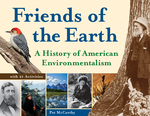
The history of American environmentalism is the history of men and women who dedicated their lives to protecting the nation’s natural heritage. Almost singlehandedly, John James Audubon introduced the study of birds in North America. John Muir pushed a president and a nation into setting aside vast preserves, including Yosemite, Sequoia, Mt. Rainier, and the Grand Canyon. Marjory Stoneman Douglas did the same for the Florida Everglades, as did Mardy Murie with the Grand Tetons and the Arctic National Wildlife Refuge. Cordelia Stanwood, and later Roger Peterson, revolutionized and popularized birdwatching. Rachel Carson opened the world’s eyes to the dangers of pesticides, and Julia “Butterfly” Hill saved a 1,000-year-old redwood while bringing to light the devastation of our old growth forests. Together, these environmentalists' inspiring life stories tell the story of American environmentalism, from its inception to the present day.
In Friends of Our Earth readers will also learn how to put their concerns into action. Author Pat McCarthy gives step-by-step instructions on how to build a birdfeeder, conduct a water quality survey, start a compost pile, study the Greenhouse Effect, make plaster casts of animals tracks, create their own recycled paper, test for acid rain, and more. It includes a time line of historic milestones, popular outdoor parks and sites to visit or explore online, and Web resources for further study.
Published Jul 2005
Published Apr 2007
Published Feb 2009
Published Aug 2009
Published Jul 2009
Published Oct 1998
Published Mar 2008
Published Aug 2001
Published Jul 2004
Published Jul 2010
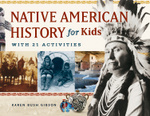
As the first Americans, hundreds of indigenous bands and nations already lived in North America when European explorers first set out to conquer an inhabited land. This book captures the early history of these complex societies and their 500-year struggle to survive against all odds from war, displacement, broken treaties, and boarding schools. Not only a history of tribal nations, Native American History for Kids also includes profiles of famous Native Americans and their many contributions, from early leaders to superstar athlete Jim Thorpe, dancer Maria Tallchief, astronaut John Herrington, author Sherman Alexie, actor Wes Studi, and more.
Readers will also learn about Indian culture through hands-on activities, such as planting a Three Sisters garden (corn, squash, and beans), making beef jerky in a low-temperature oven, weaving a basket out of folded newspaper strips, deciphering a World War II Navajo Code Talker message, and playing Ball-and-Triangle, a game popular with Penobscot children. And before they are finished, readers will be inspired to know that the history of the Native American people is the history of all Americans.
Published Nov 2012
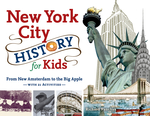
It started as New Amsterdam, a tiny 17th-century fur-trading post at the southern tip of Manhattan Island, but it grew to become New York City, a 21st-century metropolis of 8 million people. In this lively 400-year history, children will read about Peter Stuyvesant and the enterprising Dutch colonists, follow the spirited patriots as they rebel against the British during the American Revolution, learn about the crimes of the infamous Tweed Ring, journey through the notorious Five Points slum, and soar to new heights with the Empire State Building and the city’s other amazing skyscrapers. Along the way, they’ll stop at Central Park, the Brooklyn Bridge, the Statue of Liberty, and many other prominent New York landmarks.
New York City History for Kids also includes 21 informative and fun activities to better understand the Big Apple’s culture, politics, and geography. Kids will build a replica of Fort Amsterdam, paint a Dutch fireplace tile, play a game of stickball, take walking tours of City Hall Park and Fifth Avenue, and more. This valuable resource also includes a time line of significant events and a list of historic sites to visit or explore online.
Published Oct 2006
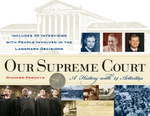
This lively and comprehensive activity book teaches young readers everything they need to know about the nation's highest court. Organized around keystones of the Constitution—including free speech, freedom of religion, civil rights, criminal justice, and property rights—the book juxtaposes historical cases with similar current cases. Presented with opinions from both sides of the court cases, readers can make up their own minds on where they stand on the important issues that have evolved in the Court over the past 200 years. Interviews with prominent politicians, high-court lawyers, and those involved with landmark decisions—including Ralph Nader, Rudolph Giuliani, Mario Cuomo, and Arlen Specter—show the personal impact and far-reaching consequences of the decisions. Fourteen engaging classroom-oriented activities involving violations of civil rights, exercises of free speech, and selecting a classroom Supreme Court bring the issues and cases to life. The first 15 amendments to the Constitution and a glossary of legal terms are also included.
Published Sep 2003
Published May 1999
Published Sep 2002
Published Jun 2000
Published Nov 1999
Published Jan 2005
Published Feb 2014
Published May 2003
Published Apr 2010
Named a Smithsonian Notable Book for Children for 2010
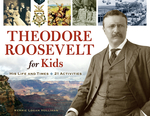
Theodore Roosevelt’s heart was as big as the great outdoors he loved. A sickly, undersized boy, he grew into a physically fit, energetic man whose courage knew no bounds. Roosevelt hailed from the top of American society, but wealth could not shield him from human tragedy. As leader of a young, vigorous nation, he steered a middle course between the power brokers of big business and the needs of ordinary working people. A keen student of nature, Roosevelt would protect millions of acres for posterity. He was a writer, ranchman, politician, soldier, explorer, family man, and America’s 26th president, the youngest person to ever hold the office.
Theodore Roosevelt for Kids brings to life this fascinating man, an American giant whose flaws were there for all the world to see. Twenty-one hands-on activities offer a useful glimpse at Roosevelt’s work and times. Readers will create a Native American toy, explore the effects of erosion, go on a modern big game hunt with a camera, and make felted teddy bears. The text includes a time line, online resources, and reading list for further study. And through it all, readers will appreciate how one man lived a “Bully!” life and made the word his very own.
Published Feb 2006
Published Sep 2011
Drawing heavily from the original letters and papers of Thomas Jefferson and his contemporaries, this resource chronicles the world of the Founding Father who wrote the Declaration of Independence. From his early critiques of the colonial policies of
Published May 2011
Swirling, curling brushstrokes. Vivid colors. Thick layers of paint. These are the hallmarks of a painting by Vincent van Gogh, whose work his fellow artist Paul Cézanne once called “that of a madman.” But Van Gogh and the Post-Impressionists for Kids moves beyond the image of the mad pauper to reveal a complex young man who loved nature and reading, spoke four languages, and enjoyed a successful career as a gallery salesman before embarking on studies as a minister and, finally, finding his calling as an artist.
Kids journey from the Netherlands to Paris to southern France as they learn about van Gogh’s friendships with four other like-minded painters who admired but were determined to depart from Impressionism: Paul Gauguin, Paul Signac, Émile Bernard, and Henri de Toulouse-Lautrec. Aspiring artists and history buffs learn not only how these Post-Impressionists’ daring shapes, colors, and techniques distinguished their work from what was painted before but also how the men helped one another and whether or not they always got along.
Twenty-one creative projects bring history and art to life. Readers will create a Starry Night peep box, make a Pointillist sailboat (that can really sail!), craft a Japanese fold-out album, and much more. The text includes a time line, glossary, and reading list for further study.
Published Apr 2013
Giuseppe Verdi dominated Italian opera for 50 years, and his operas are performed throughout the world today. Verdi for Kids offers young readers an accessible, behind-the-scenes peek into the exciting world of opera and traces Verdi’s path to fame, delving into the great composer’s childhood, musical training, family tragedies, and professional setbacks and successes. Kids also learn about the Italians’ passion for opera and Italy’s tumultuous past, key political figures, and cultural pastimes. Aspiring sopranos, baritones, musicians, conductors, and stage directors will learn about opera jobs and production, what happens at rehearsal, and music terms and vocabulary, gaining an understanding of opera’s rich tradition.
Offering a time line, glossary, and list of additional resources, Verdi for Kids is an engaging resource for students, parents, and teachers. Fun hands-on activities illuminate both the music concepts introduced and the times in which Verdi lived.
Published Apr 2014
Kids can:
· Make a periscope
· Teach a dog to carry messages
· Make a parachute
· Learn a popular World War I song
· Cook Maconochie Stew
· And much more
Published Sep 2002
Published Aug 1997
Published May 1994
Published Aug 1996
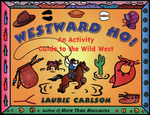
Capturing the unique character and history of the West, this activity book provides a number of memorable journeys, including joining Lewis and Clark on an expedition, journeying into the woods with fur traders, or riding a wagon train to the Oregon. Young explorers will experience the excitement of the West with activities such as sewing a sunbonnet, panning for gold, cooking flapjacks, singing cowboy songs, and more. Helpful illustrations that detail and explain the steps of each project are also included.
Published May 2012
2012 Gelett Burgess Children's Book Award Winner in Technology Category
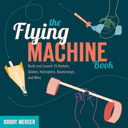
Calling all future Amelia Earharts and Chuck Yeagers—there’s more than one way to get off the ground! The Flying Machine Book will show you how to construct 35 easy-to-build and fun-to-fly contraptions that can be used indoors or out. Better still, each of these rockets, gliders, boomerangs, launchers, and helicopters can be made for little or no cost using recycled materials. Rubber bands, paper clips, straws, plastic bottles, and index cards can all be transformed into amazing, gravity-defying flyers, from Bottle Rockets to Grape Bazookas, Plastic Zippers to Maple Key Helicopters.
Each project contains a materials list and detailed step-by-step instructions with photos, as well as an explanation of the science behind the flyer. Use this information to modify and improve your designs, or explain to your teacher why throwing a paper airplane is a mini science lesson.
Published Mar 2013
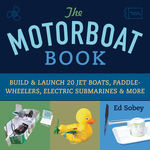
There’s more than one way to power a toy boat. Electric motors, balloons, gears, water jets, belt drives, chemical reactions, steam, and even gravity can be used to propel a small ship across a pool. Also, the boats’ propellers and paddles can be side-mounted or at the stern, or even sit above the waterline, like a fan-powered swamp boat. The Motorboat Book will show children how to build more than 20 different models through step-by-step instructions with clear photos. And if they’d rather travel under the water than over it, the book has 6 different submarine projects.
In addition to the boatbuilding activities, author Ed Sobey includes instructions on how to build an “ocean” to test the boats, as well as accessories such as four different water pumps, waterproof battery and motor cases, and a working foghorn. Most of the boats are built from recycled and easy-to-find materials, but an appendix lists local and online sources for wire, plastic propellers, small motors, and more. Educators will appreciate the Meeting Science Standards summary at the end of the book.
Published Jun 2010
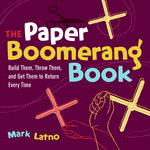
A detailed reference on the latest craze in lightweight aeronautics, this manual shows how to build and throw paper boomerangs. Techniques for mastering the basics will help beginners, while techniques for impressive throws—such as the behind-the-back toss; the boomerang juggle; the under-the-leg catch; and the dreaded double-handed, backward, double-boomerang throw—will thrill even the most advanced boomeranger. A history of the device and the physics behind its circuitous flight are also included, making this the only comprehensive reference on this fascinating toy.
Published Oct 2013
Published Apr 2008
Families looking to enrich their green thumbs while beautifying their homes will enjoy this comprehensive guide to indoor and outdoor gardening using nontoxic flowers, vegetables, trees, and houseplants. Sorted by type—plants from seed, bulbs, annuals, perennials, fruiting trees, and sensory plants—each plant is thoroughly explained and easy to identify using color photographs. Details such as the flora’s preferred habit and why a particular plant is good for kids are included along with suggestions for use in the garden. Seventeen gardening projects illustrate a variety of creative and fun ways for children and parents to plant together, including butterfly gardens, herb pots, hanging baskets, rock gardens, and cutting gardens.
Published Apr 2008
From spectacular clothing and masks to pottery and music of Ghana and West Africa, this guide inspires children to try these elaborate yet easy-to-make crafts for themselves. A great way to connect children to their African roots or expose them to new cultures around the world, this fully illustrated guide features step-by-step instructions and contemporary color photos that teach kids how to make their own creations. Projects include how to design and wear Adinkra block-printed clothing, coil and decorate unique pottery, create masks for special occasions, craft and play musical instruments, and weave decorative Kente cloth. This resource also includes a brief history of Ghana and West Africa and the traditions and history behind each craft, how they are made and used today, and their importance in West African society. Kids will love learning how music is often tied to certain ceremonies and how dance is believed to wash away disagreements and arguments and bring greater unity. A resource section—listing books, websites, and museums for further exploration—and an index round out this fascinating reference.
Published Apr 2008
From spectacular clothing and masks to pottery and music of Ghana and West Africa, this guide inspires children to try these elaborate yet easy-to-make crafts for themselves. A great way to connect children to their African roots or expose them to new cultures around the world, this fully illustrated guide features step-by-step instructions and contemporary color photos that teach kids how to make their own creations. Projects include how to design and wear Adinkra block-printed clothing, coil and decorate unique pottery, create masks for special occasions, craft and play musical instruments, and weave decorative Kente cloth. This resource also includes a brief history of Ghana and West Africa and the traditions and history behind each craft, how they are made and used today, and their importance in West African society. Kids will love learning how music is often tied to certain ceremonies and how dance is believed to wash away disagreements and arguments and bring greater unity. A resource section—listing books, websites, and museums for further exploration—and an index round out this fascinating reference.
Published Nov 2007
Published Feb 2008
Published May 2003
Published Jul 2012
Did you know...
Published Aug 2007
Published Jun 1999
Published Apr 2004
Published Oct 2010
Published Feb 2009
Published Nov 1993
Published Oct 2000
Published Dec 2008
Melding memorable music and inspiring history, Freedom Song presents a fresh perspective on the civil rights movement by showing how songs of hope, faith, and freedom strengthened the movement and served as its voice. In this eye-opening account, you’ll discover how churches and other groups--from the SNCC Freedom Singers to the Chicago Children’s Choir--transformed music both religious and secular into electrifying anthems that furthered the struggle for civil rights.
From rallies to marches to mass meetings, music was ever-present in the movement. People sang songs to give themselves courage and determination, to spread their message to others, to console each other as they sat in jail. The music they shared took many different forms, including traditional spirituals once sung by slaves, jazz and blues music, and gospel, folk, and pop songs. Freedom Song explores in detail the galvanizing roles of numerous songs, including “Lift Every Voice and Sing,” “The Battle of Jericho,” “Wade in the Water,” and “We Shall Overcome.”
As Rosa Parks, Martin Luther King Jr., and many others took a stand against prejudice and segregation, a Chicago minister named Chris Moore started a children’s choir that embraced the spirit of the civil rights movement and brought young people of different races together, young people who lent their voices to support African Americans struggling for racial equality. More than 50 years later, the Chicago Children’s Choir continues its commitment to freedom and justice. An accompanying CD, Songs on the Road to Freedom, features the CCC performing the songs discussed throughout the book.
Published Mar 1995
Published Aug 2005
Published Mar 1998
Published Jan 2010
Published Jul 1998
Published May 1998
Published Oct 2003
Published Sep 2007
Published Mar 2007
Published Jun 2003
Published Jun 2003
Published Mar 2000
Published May 2011
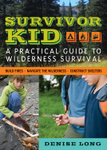
Anyone can get lost while camping or on a hike and Survivor Kid teaches young adventurers the survival skills they need if they ever find themselves lost or in a dangerous situation in the wild. Written by a search and rescue professional and lifelong camper, it’s filled with safe and practical advice on building shelters and fires, signaling for help, finding water and food, dealing with dangerous animals, learning how to navigate, and avoiding injuries in the wilderness. Ten projects include building a simple brush shelter, using a reflective surface to start a fire, testing your navigation skills with a treasure hunt, and casting animal tracks to improve your observation skills.
Published Mar 2000
Published Mar 2013
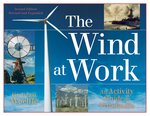
Explaining how the wind works, what windmills have contributed to the past, and why they offer environmental promise today as a source of clean, renewable energy, this revised and updated edition offers a glimpse into all the current and historical uses for wind power. Featuring new information on wind energy technology and wind farms, new photographs, and 24 wind-related activities—from keeping track of household energy use and conducting science experiments to cooking traditional meals and creating arts and crafts—this handy resource offers kids interested in the science of energy and green technologies an engaging, interactive, and contemporary overview of wind power.
Published Oct 2010
Published Jan 2013
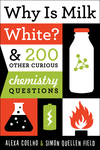
When it comes to chemistry, most kids have more questions than answers. Why do you get cavities when you eat too much sugar? How does sun block protect your skin from getting a sunburn? What makes soda so fizzy? And why do you need antifreeze in your car? Teenager Alexa Coelho quizzed her neighbor, chemist Simon Field, with hundreds of perplexing questions, and now she has the answers. Field covers a wide variety of concepts from simple to complex, but always with straightforward, easy-to-understand explanations.
And for those readers who want to see chemistry in action, Why Is Milk White? also includes a dozen unique experiments to try at home. Lift latent fingerprints from a “crime scene” using super glue (for a glass or smooth surface) or iodine (for paper). Hollow out the zinc interior of a penny using muriatic acid, leaving only a thin copper shell. Conduct a paper chromatography experiment to separate food coloring into its component dyes. Or use easy-to-find chemicals to create plastic “slime,” Silly Putty, or a bouncing ball. This book is the perfect resource for budding scientists everywhere.