Suggested reading from Chicago Review Press
 Mother's Day Mother's Day |
 Father's Day Father's Day |


 |
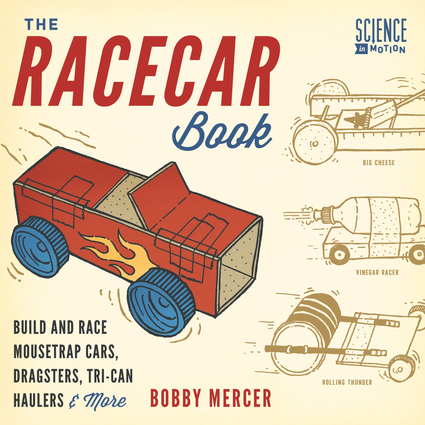
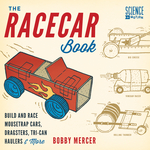
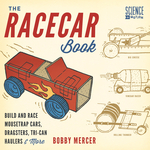
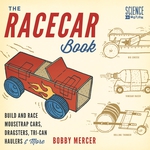
Build and Race Mousetrap Cars, Dragsters, Tri-Can Haulers & More
By Bobby Mercer
Science in Motion
JUVENILE NONFICTION
216 Pages, 8 x 8
Formats: Trade Paper, Mobipocket, EPUB, PDF
EPUB, $12.99 (US $12.99) (EU $9.99) (CA $17.99) (AU $13.99)
ISBN 9781613747179
Rights: WOR
Chicago Review Press (Oct 2013)
Overview
Reviews
“Edible racers would be a smash hit at learning co-ops classes, science competitions and birthday parties. Who will win the main event: Chocolate Thunder, Spud Racer, Mallow Magic, Bun Fun, or Rice Car? Start your engines!” —Practical Homeschooling
Author Biography
Bobby Mercer has been a high school physics teacher for more than two decades. He is the author of The Flying Machine Book and Smash It! Crash It! Launch It! He lives outside of Asheville, North Carolina.
May we also suggest...
Published Jun 2010
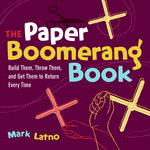
A detailed reference on the latest craze in lightweight aeronautics, this manual shows how to build and throw paper boomerangs. Techniques for mastering the basics will help beginners, while techniques for impressive throws—such as the behind-the-back toss; the boomerang juggle; the under-the-leg catch; and the dreaded double-handed, backward, double-boomerang throw—will thrill even the most advanced boomeranger. A history of the device and the physics behind its circuitous flight are also included, making this the only comprehensive reference on this fascinating toy.
Mobipocket
Published Jun 2010
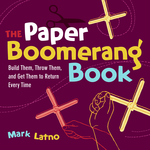
A detailed reference on the latest craze in lightweight aeronautics, this manual shows how to build and throw paper boomerangs. Techniques for mastering the basics will help beginners, while techniques for impressive throws—such as the behind-the-back toss; the boomerang juggle; the under-the-leg catch; and the dreaded double-handed, backward, double-boomerang throw—will thrill even the most advanced boomeranger. A history of the device and the physics behind its circuitous flight are also included, making this the only comprehensive reference on this fascinating toy.
EPUB
Published Jun 2010
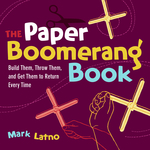
A detailed reference on the latest craze in lightweight aeronautics, this manual shows how to build and throw paper boomerangs. Techniques for mastering the basics will help beginners, while techniques for impressive throws—such as the behind-the-back toss; the boomerang juggle; the under-the-leg catch; and the dreaded double-handed, backward, double-boomerang throw—will thrill even the most advanced boomeranger. A history of the device and the physics behind its circuitous flight are also included, making this the only comprehensive reference on this fascinating toy.
Trade Paper
Published May 2012
2012 Gelett Burgess Children's Book Award Winner in Technology Category
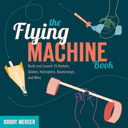
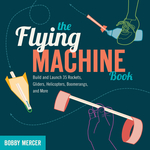
Calling all future Amelia Earharts and Chuck Yeagers—there’s more than one way to get off the ground! The Flying Machine Book will show you how to construct 35 easy-to-build and fun-to-fly contraptions that can be used indoors or out. Better still, each of these rockets, gliders, boomerangs, launchers, and helicopters can be made for little or no cost using recycled materials. Rubber bands, paper clips, straws, plastic bottles, and index cards can all be transformed into amazing, gravity-defying flyers, from Bottle Rockets to Grape Bazookas, Plastic Zippers to Maple Key Helicopters.
Each project contains a materials list and detailed step-by-step instructions with photos, as well as an explanation of the science behind the flyer. Use this information to modify and improve your designs, or explain to your teacher why throwing a paper airplane is a mini science lesson.
Published May 2012
2012 Gelett Burgess Children's Book Award Winner in Technology Category
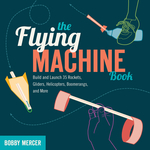
Calling all future Amelia Earharts and Chuck Yeagers—there’s more than one way to get off the ground! The Flying Machine Book will show you how to construct 35 easy-to-build and fun-to-fly contraptions that can be used indoors or out. Better still, each of these rockets, gliders, boomerangs, launchers, and helicopters can be made for little or no cost using recycled materials. Rubber bands, paper clips, straws, plastic bottles, and index cards can all be transformed into amazing, gravity-defying flyers, from Bottle Rockets to Grape Bazookas, Plastic Zippers to Maple Key Helicopters.
Each project contains a materials list and detailed step-by-step instructions with photos, as well as an explanation of the science behind the flyer. Use this information to modify and improve your designs, or explain to your teacher why throwing a paper airplane is a mini science lesson.
EPUB
Published May 2012
2012 Gelett Burgess Children's Book Award Winner in Technology Category
Calling all future Amelia Earharts and Chuck Yeagers—there’s more than one way to get off the ground! The Flying Machine Book will show you how to construct 35 easy-to-build and fun-to-fly contraptions that can be used indoors or out. Better still, each of these rockets, gliders, boomerangs, launchers, and helicopters can be made for little or no cost using recycled materials. Rubber bands, paper clips, straws, plastic bottles, and index cards can all be transformed into amazing, gravity-defying flyers, from Bottle Rockets to Grape Bazookas, Plastic Zippers to Maple Key Helicopters.
Each project contains a materials list and detailed step-by-step instructions with photos, as well as an explanation of the science behind the flyer. Use this information to modify and improve your designs, or explain to your teacher why throwing a paper airplane is a mini science lesson.
Mobipocket
Published May 2012
2012 Gelett Burgess Children's Book Award Winner in Technology Category
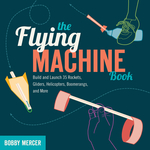
Calling all future Amelia Earharts and Chuck Yeagers—there’s more than one way to get off the ground! The Flying Machine Book will show you how to construct 35 easy-to-build and fun-to-fly contraptions that can be used indoors or out. Better still, each of these rockets, gliders, boomerangs, launchers, and helicopters can be made for little or no cost using recycled materials. Rubber bands, paper clips, straws, plastic bottles, and index cards can all be transformed into amazing, gravity-defying flyers, from Bottle Rockets to Grape Bazookas, Plastic Zippers to Maple Key Helicopters.
Each project contains a materials list and detailed step-by-step instructions with photos, as well as an explanation of the science behind the flyer. Use this information to modify and improve your designs, or explain to your teacher why throwing a paper airplane is a mini science lesson.
Trade Paper
Published Mar 2013
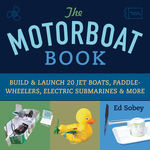
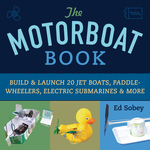
There’s more than one way to power a toy boat. Electric motors, balloons, gears, water jets, belt drives, chemical reactions, steam, and even gravity can be used to propel a small ship across a pool. Also, the boats’ propellers and paddles can be side-mounted or at the stern, or even sit above the waterline, like a fan-powered swamp boat. The Motorboat Book will show children how to build more than 20 different models through step-by-step instructions with clear photos. And if they’d rather travel under the water than over it, the book has 6 different submarine projects.
In addition to the boatbuilding activities, author Ed Sobey includes instructions on how to build an “ocean” to test the boats, as well as accessories such as four different water pumps, waterproof battery and motor cases, and a working foghorn. Most of the boats are built from recycled and easy-to-find materials, but an appendix lists local and online sources for wire, plastic propellers, small motors, and more. Educators will appreciate the Meeting Science Standards summary at the end of the book.
Trade Paper
Published Oct 2013
Mobipocket
Published Mar 2013
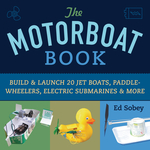
There’s more than one way to power a toy boat. Electric motors, balloons, gears, water jets, belt drives, chemical reactions, steam, and even gravity can be used to propel a small ship across a pool. Also, the boats’ propellers and paddles can be side-mounted or at the stern, or even sit above the waterline, like a fan-powered swamp boat. The Motorboat Book will show children how to build more than 20 different models through step-by-step instructions with clear photos. And if they’d rather travel under the water than over it, the book has 6 different submarine projects.
In addition to the boatbuilding activities, author Ed Sobey includes instructions on how to build an “ocean” to test the boats, as well as accessories such as four different water pumps, waterproof battery and motor cases, and a working foghorn. Most of the boats are built from recycled and easy-to-find materials, but an appendix lists local and online sources for wire, plastic propellers, small motors, and more. Educators will appreciate the Meeting Science Standards summary at the end of the book.
EPUB
Published Mar 2013
There’s more than one way to power a toy boat. Electric motors, balloons, gears, water jets, belt drives, chemical reactions, steam, and even gravity can be used to propel a small ship across a pool. Also, the boats’ propellers and paddles can be side-mounted or at the stern, or even sit above the waterline, like a fan-powered swamp boat. The Motorboat Book will show children how to build more than 20 different models through step-by-step instructions with clear photos. And if they’d rather travel under the water than over it, the book has 6 different submarine projects.
In addition to the boatbuilding activities, author Ed Sobey includes instructions on how to build an “ocean” to test the boats, as well as accessories such as four different water pumps, waterproof battery and motor cases, and a working foghorn. Most of the boats are built from recycled and easy-to-find materials, but an appendix lists local and online sources for wire, plastic propellers, small motors, and more. Educators will appreciate the Meeting Science Standards summary at the end of the book.
Published Mar 2013
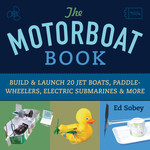
There’s more than one way to power a toy boat. Electric motors, balloons, gears, water jets, belt drives, chemical reactions, steam, and even gravity can be used to propel a small ship across a pool. Also, the boats’ propellers and paddles can be side-mounted or at the stern, or even sit above the waterline, like a fan-powered swamp boat. The Motorboat Book will show children how to build more than 20 different models through step-by-step instructions with clear photos. And if they’d rather travel under the water than over it, the book has 6 different submarine projects.
In addition to the boatbuilding activities, author Ed Sobey includes instructions on how to build an “ocean” to test the boats, as well as accessories such as four different water pumps, waterproof battery and motor cases, and a working foghorn. Most of the boats are built from recycled and easy-to-find materials, but an appendix lists local and online sources for wire, plastic propellers, small motors, and more. Educators will appreciate the Meeting Science Standards summary at the end of the book.
Mobipocket
Published Oct 2013
Published Oct 2013
Published Oct 2014
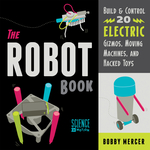
How to use reuse and recycle components and supplies to build a variety of devices
The 20 easy-to-build robots in this project book can be constructed for little or no cost using common household objects and repurposed materials. From learning how to turn a toothbrush, an old cell phone or pager, and scrap wire into a Brush Bot, or how to hack a toy car to hotwire a Not-So-Remote Bot, each hands-on project contains a materials list and detailed step-by-step instructions with photos. Explanations of the science and technology behind each robot—including concepts such as friction, weight and mass, center of gravity, kinetic and potential energy, electric circuitry, DC vs. AC current, and more—are also included.
Mobipocket
Published Oct 2014
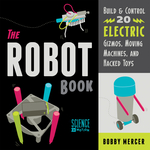
How to use reuse and recycle components and supplies to build a variety of devices
The 20 easy-to-build robots in this project book can be constructed for little or no cost using common household objects and repurposed materials. From learning how to turn a toothbrush, an old cell phone or pager, and scrap wire into a Brush Bot, or how to hack a toy car to hotwire a Not-So-Remote Bot, each hands-on project contains a materials list and detailed step-by-step instructions with photos. Explanations of the science and technology behind each robot—including concepts such as friction, weight and mass, center of gravity, kinetic and potential energy, electric circuitry, DC vs. AC current, and more—are also included.
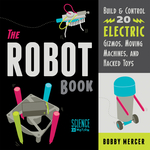
EPUB
Published Oct 2014
How to use reuse and recycle components and supplies to build a variety of devices
The 20 easy-to-build robots in this project book can be constructed for little or no cost using common household objects and repurposed materials. From learning how to turn a toothbrush, an old cell phone or pager, and scrap wire into a Brush Bot, or how to hack a toy car to hotwire a Not-So-Remote Bot, each hands-on project contains a materials list and detailed step-by-step instructions with photos. Explanations of the science and technology behind each robot—including concepts such as friction, weight and mass, center of gravity, kinetic and potential energy, electric circuitry, DC vs. AC current, and more—are also included.