
Follow Us



 |
Trade Paper, PDF, EPUB, Mobipocket
Published Jul 2017
Trade Paper, PDF, EPUB, Mobipocket
Published Nov 2011
PDF, EPUB, Mobipocket
Published Feb 2015
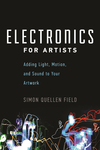
With today’s modern technology—LEDs, servomotors, motion sensors, speakers, and more—artwork can incorporate elements of light, sound, and motion for dramatic effects. Author and educator Simon Quellen Field has developed a primer for creative individuals looking for new ways to express themselves though electronically enhanced art. Following step-by-step examples of basic circuitry and programming, readers can develop the skills necessary to enhance their works of art. The book also features art projects to try, including a bouquet of glowing flowers, an LED metronome, a talking computer, a sensile robot, and a simple wheeled robot. A variety of artistic works created by Field’s students and based on these open-ended lessons are also included to provide creative sparks for the readers. For those interested in programming their circuits, Field explores the basics of Energia, a free software package, and provides simple programs to create flashing light patterns, computer controlled motors, and LCD text displays.
Trade Paper, PDF, EPUB, Mobipocket
Published Jan 2019
Trade Paper, PDF, EPUB, Mobipocket
Published Jan 2013
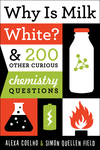
When it comes to chemistry, most kids have more questions than answers. Why do you get cavities when you eat too much sugar? How does sun block protect your skin from getting a sunburn? What makes soda so fizzy? And why do you need antifreeze in your car? Teenager Alexa Coelho quizzed her neighbor, chemist Simon Field, with hundreds of perplexing questions, and now she has the answers. Field covers a wide variety of concepts from simple to complex, but always with straightforward, easy-to-understand explanations.
And for those readers who want to see chemistry in action, Why Is Milk White? also includes a dozen unique experiments to try at home. Lift latent fingerprints from a “crime scene” using super glue (for a glass or smooth surface) or iodine (for paper). Hollow out the zinc interior of a penny using muriatic acid, leaving only a thin copper shell. Conduct a paper chromatography experiment to separate food coloring into its component dyes. Or use easy-to-find chemicals to create plastic “slime,” Silly Putty, or a bouncing ball. This book is the perfect resource for budding scientists everywhere.